
Most laundries in the city are a counter and a man with an iron. Behind LaundroKart is a working plant — Italian dry-cleaning, American and French washers, a finishing line, and a team that reads the label on every garment before it decides anything. This is what your clothes actually go through.
Eight stages. A garment only moves to the next one when it has passed the last.
Every piece gets its own tag at the counter. That tag stays on it through the whole plant, which is how a single shirt comes back to the right bag.
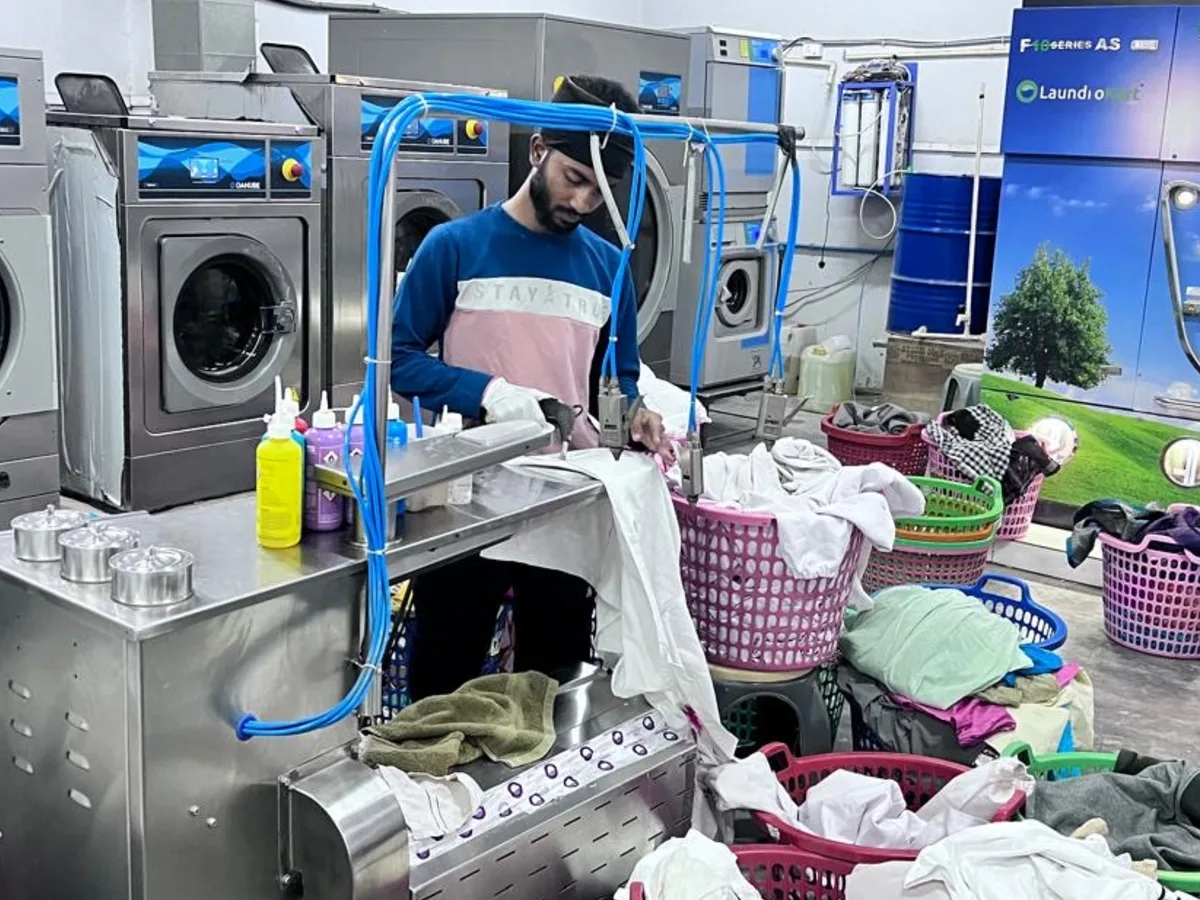
Stains are treated by hand at the spotting station first. Once a stain has been through a hot wash it is usually set for good.
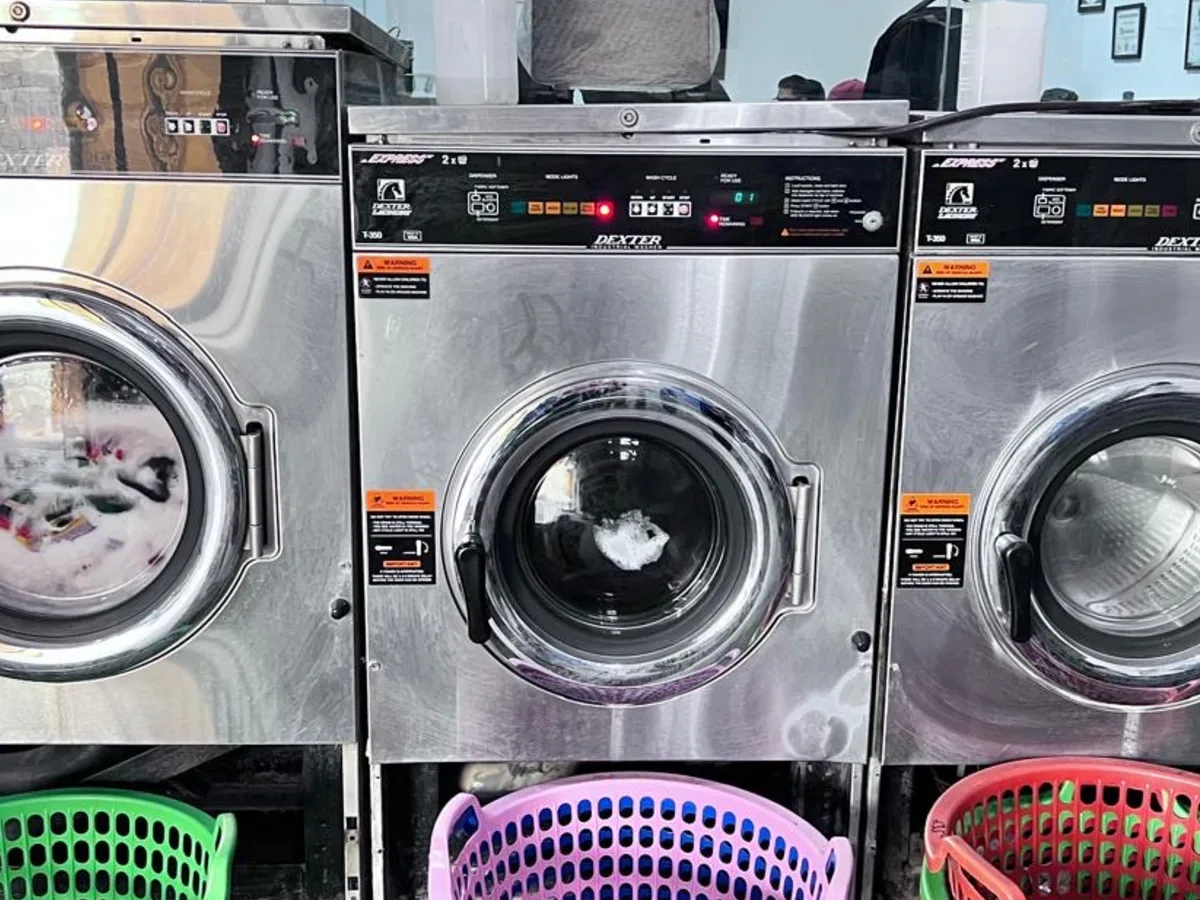
Whites, colours, delicates and heavy items run separately, in machines sized so clothes have room to move.
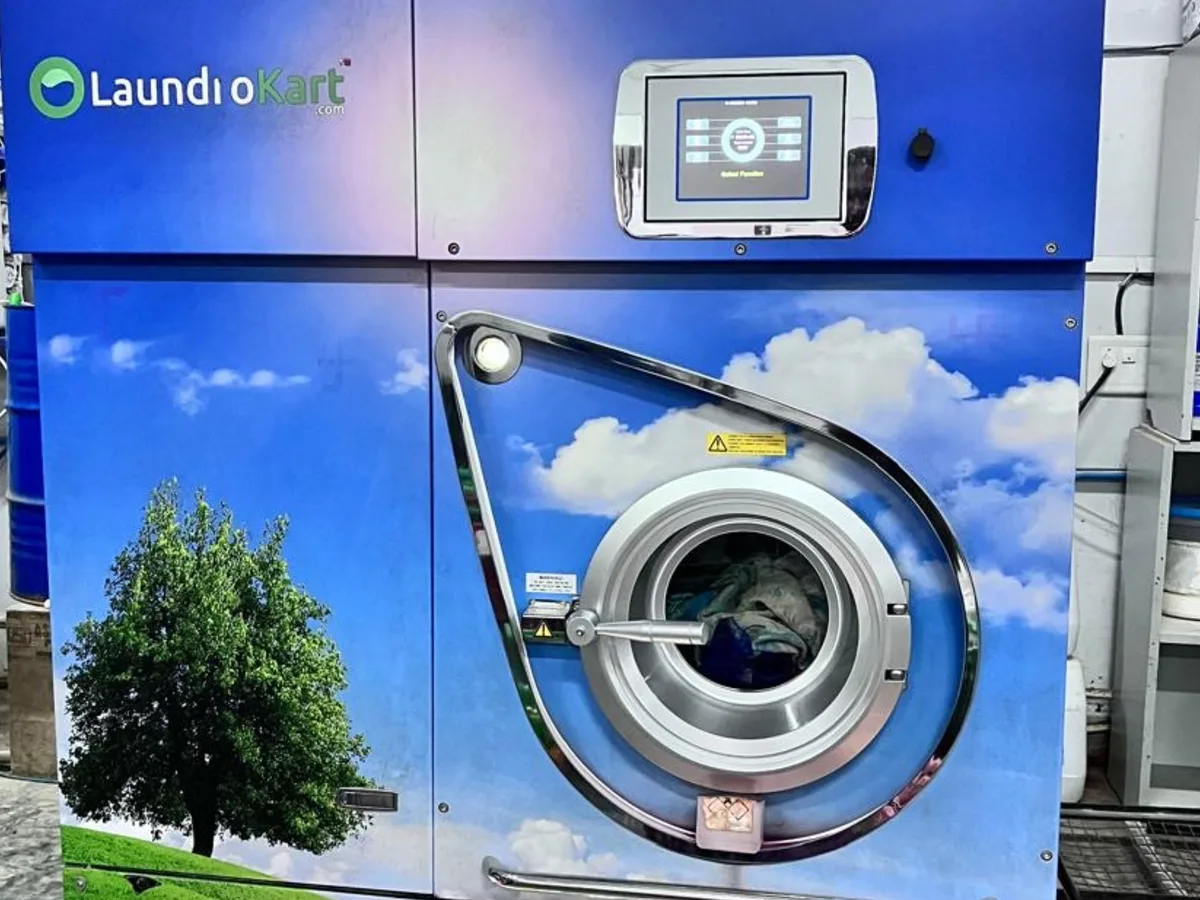
Suits, silks, sarees and designer labels go to the dry-cleaning machine instead, where solvent lifts soil without swelling the fibres.
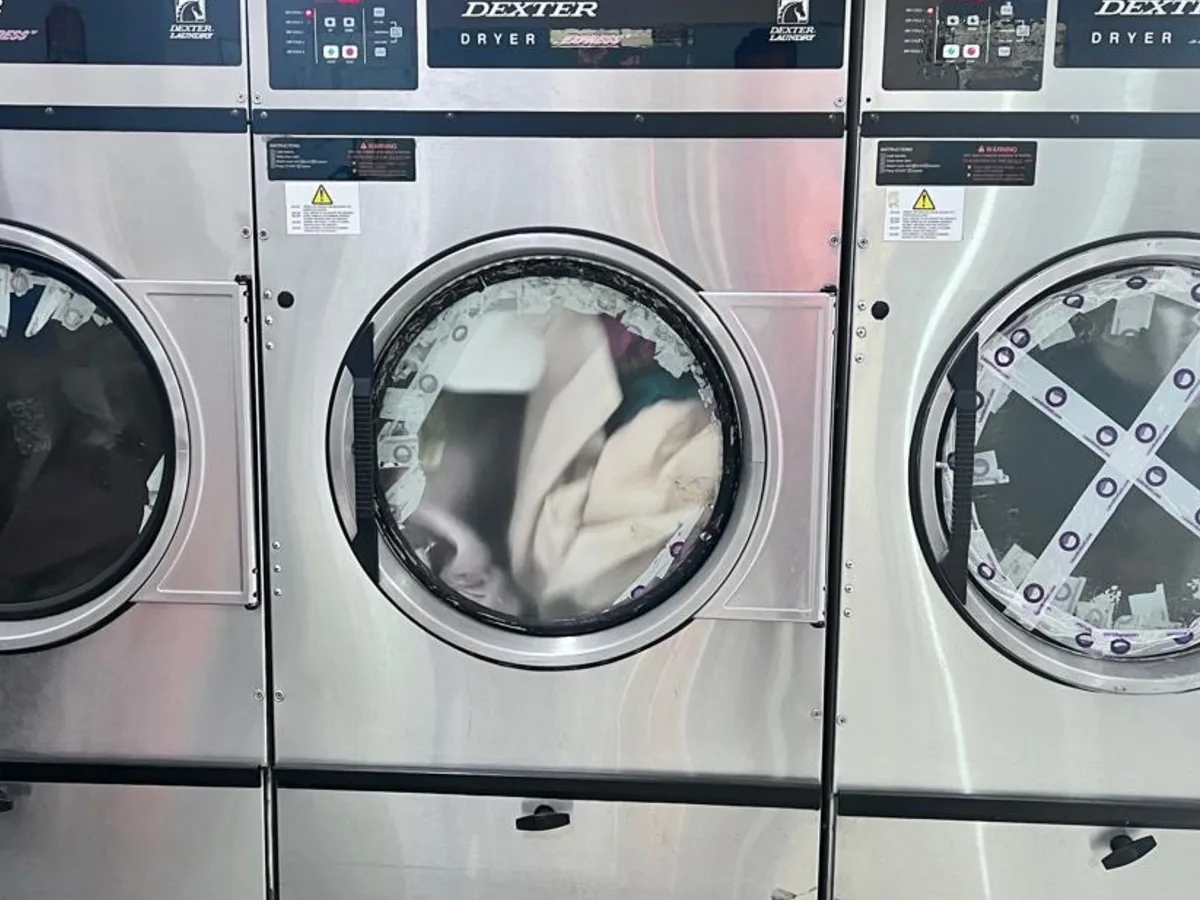
Heat is matched to the fabric. Cotton can take it; synthetics and woollens cannot, and that is where most home laundry goes wrong.
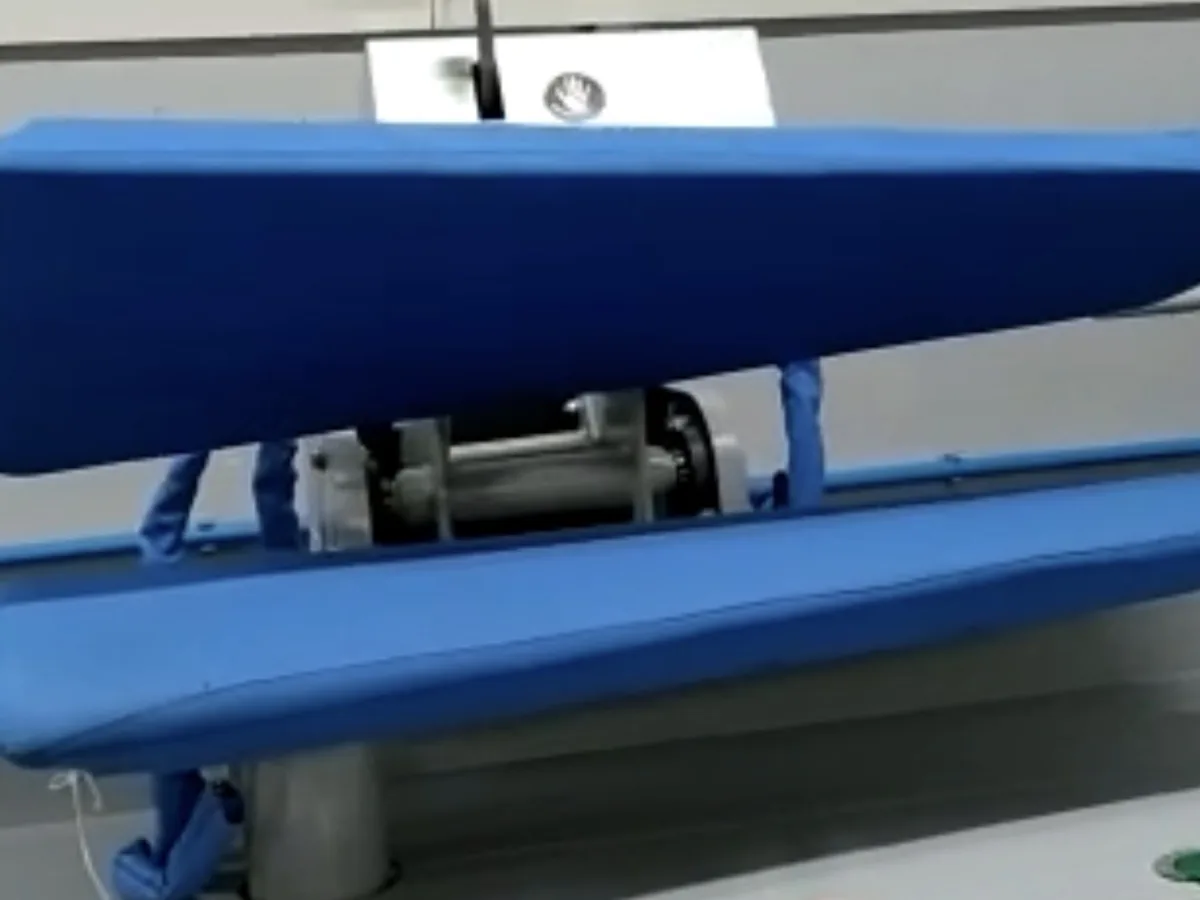
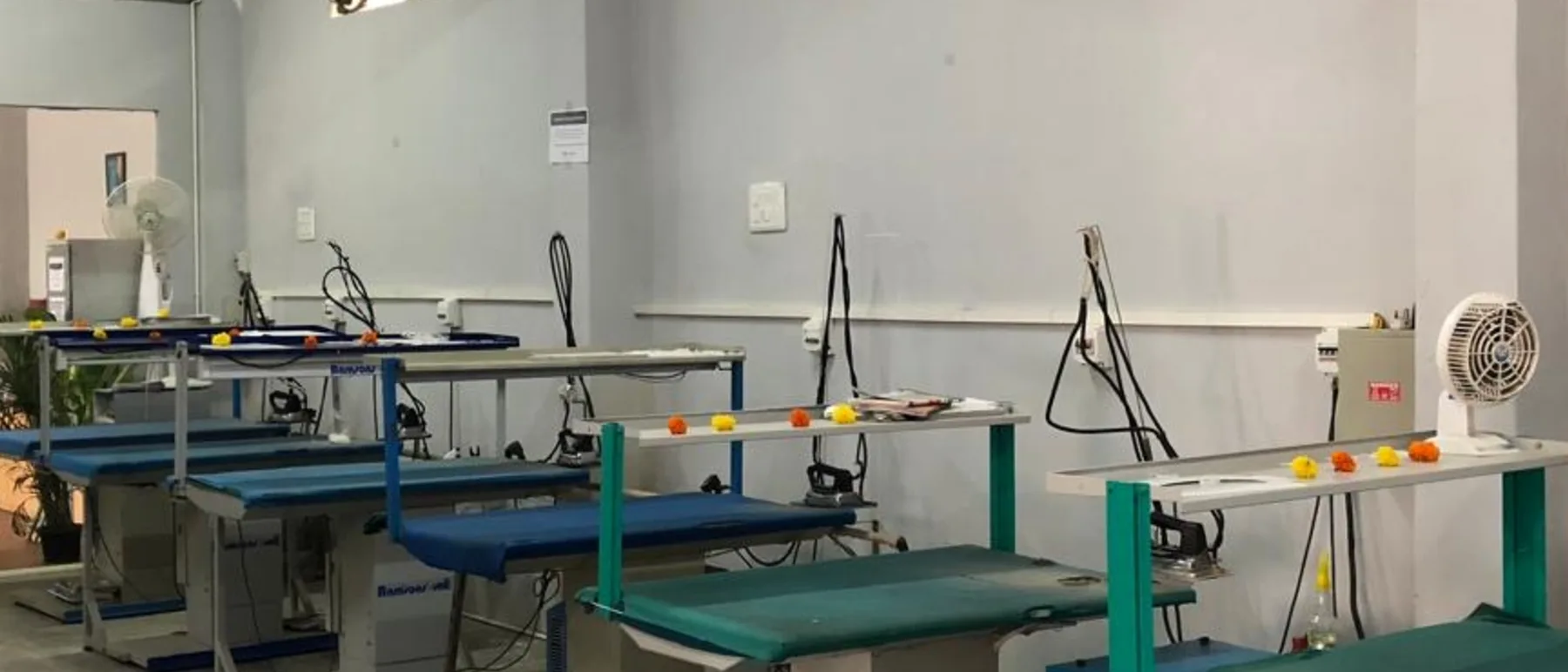
A steam press puts a finish on a collar and a crease in a trouser that a domestic iron cannot reach.
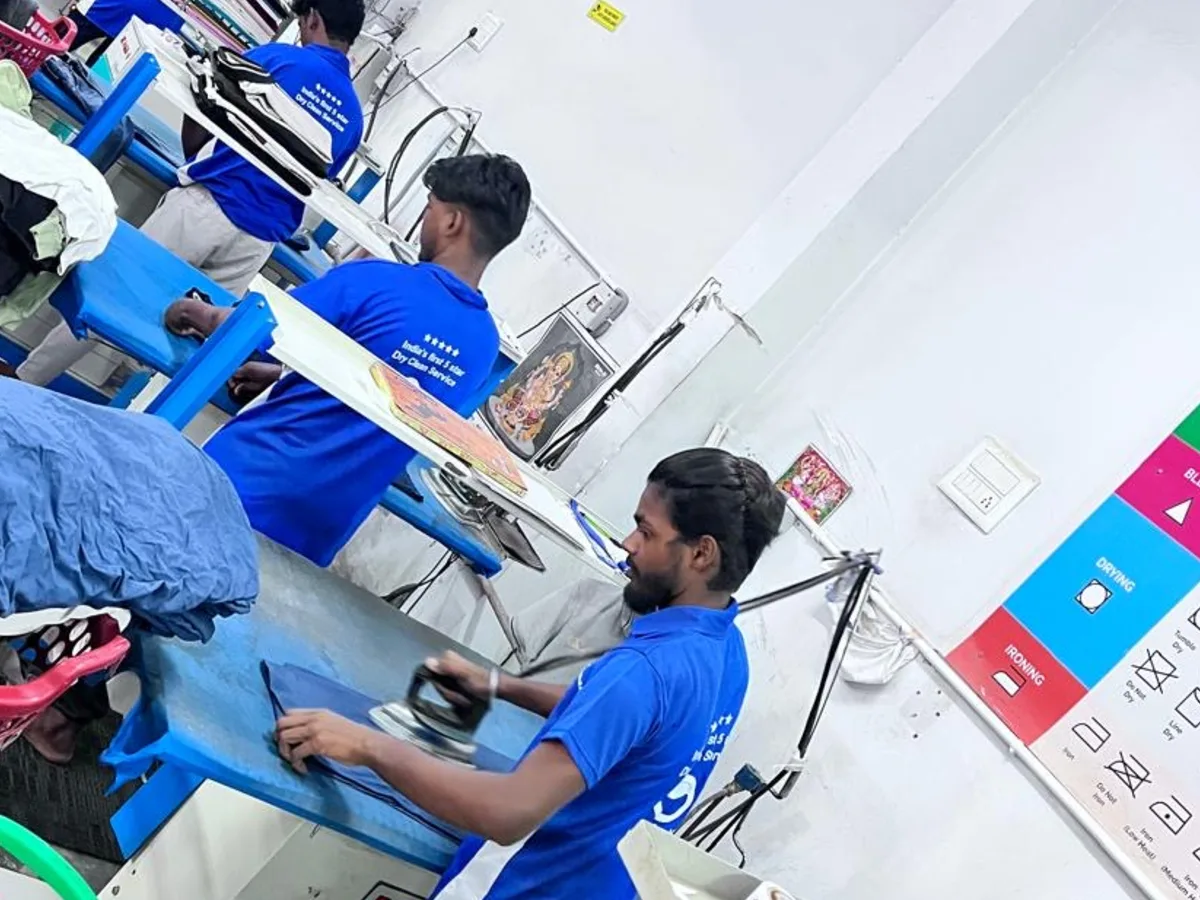
Every garment is finished by a person, not a conveyor. Buttons get checked, seams get straightened, and anything not right goes back.
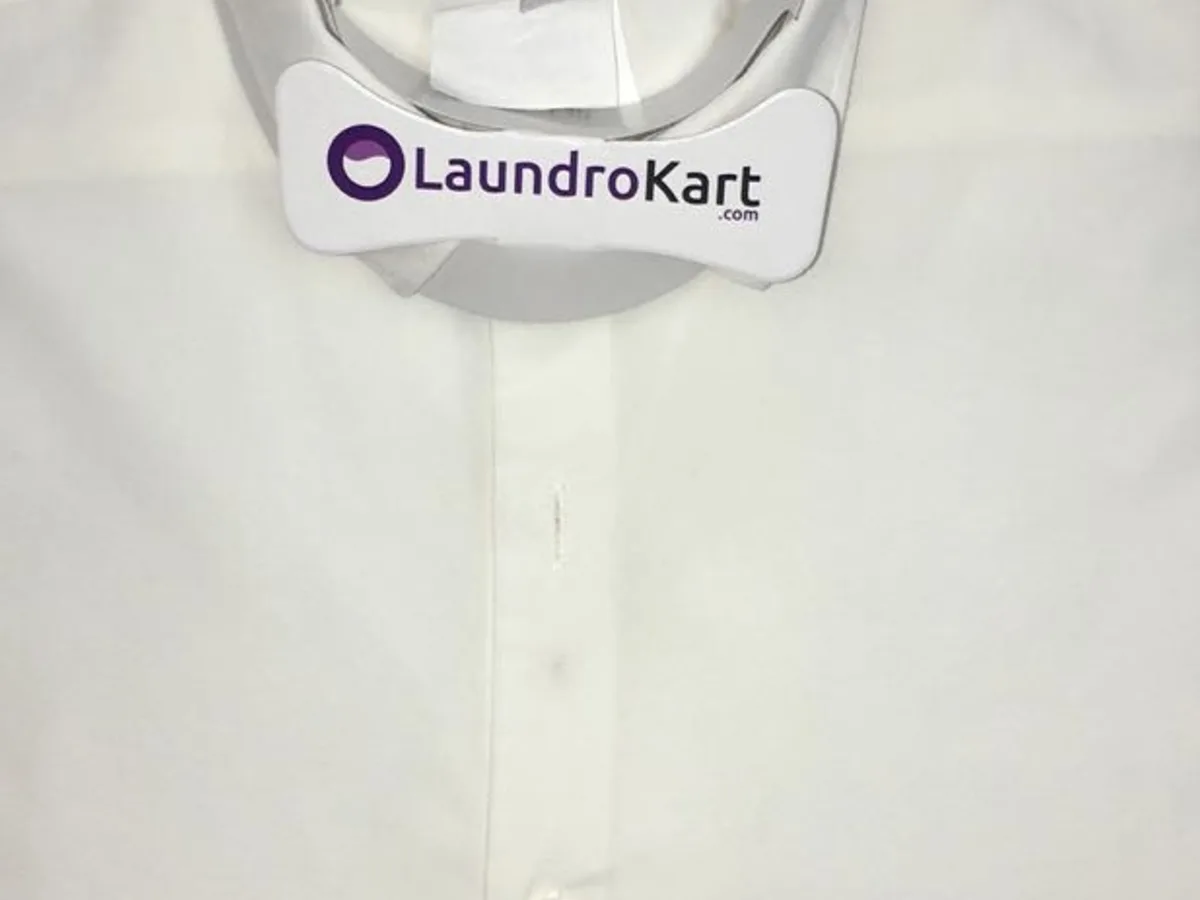
Folded or on a hanger, sealed, and back at your door on the slot you chose.
Laundry equipment is the difference between clean and cared for. This is the kit your clothes meet.
Our dry-cleaning machine, in our own livery. It runs a gentler hydrocarbon process rather than harsh perc, which is kinder to silk, wool and embroidery — and to the people working beside it all day.
Commercial machines built for a plant, not a flat. Programmable cycles mean a bedsheet and a kurta are never washed the same way.
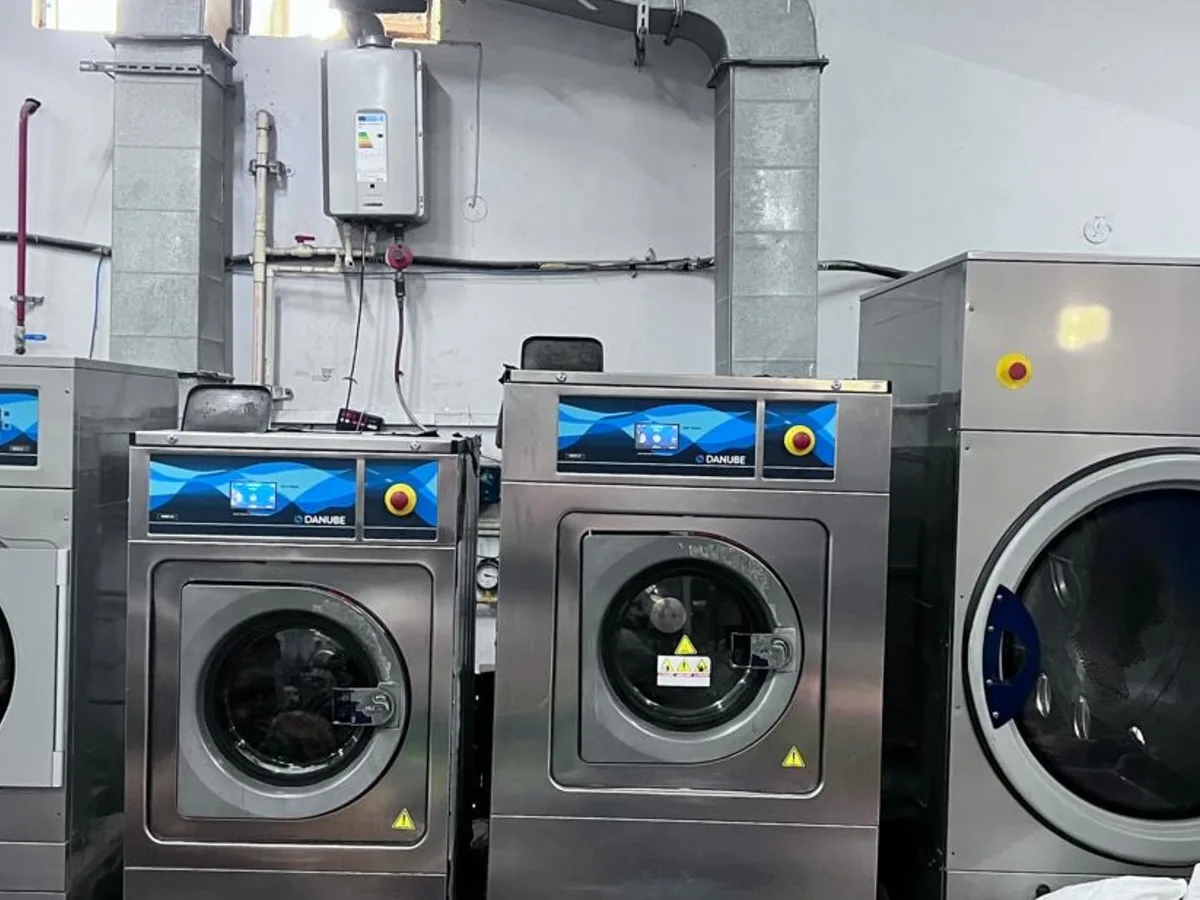
High-extraction drums spin more water out before drying, so clothes spend less time under heat. Less heat, longer life.
Steam relaxes the fibre and the press sets the shape. It is why a pressed shirt from us holds its finish far longer than one ironed at home.
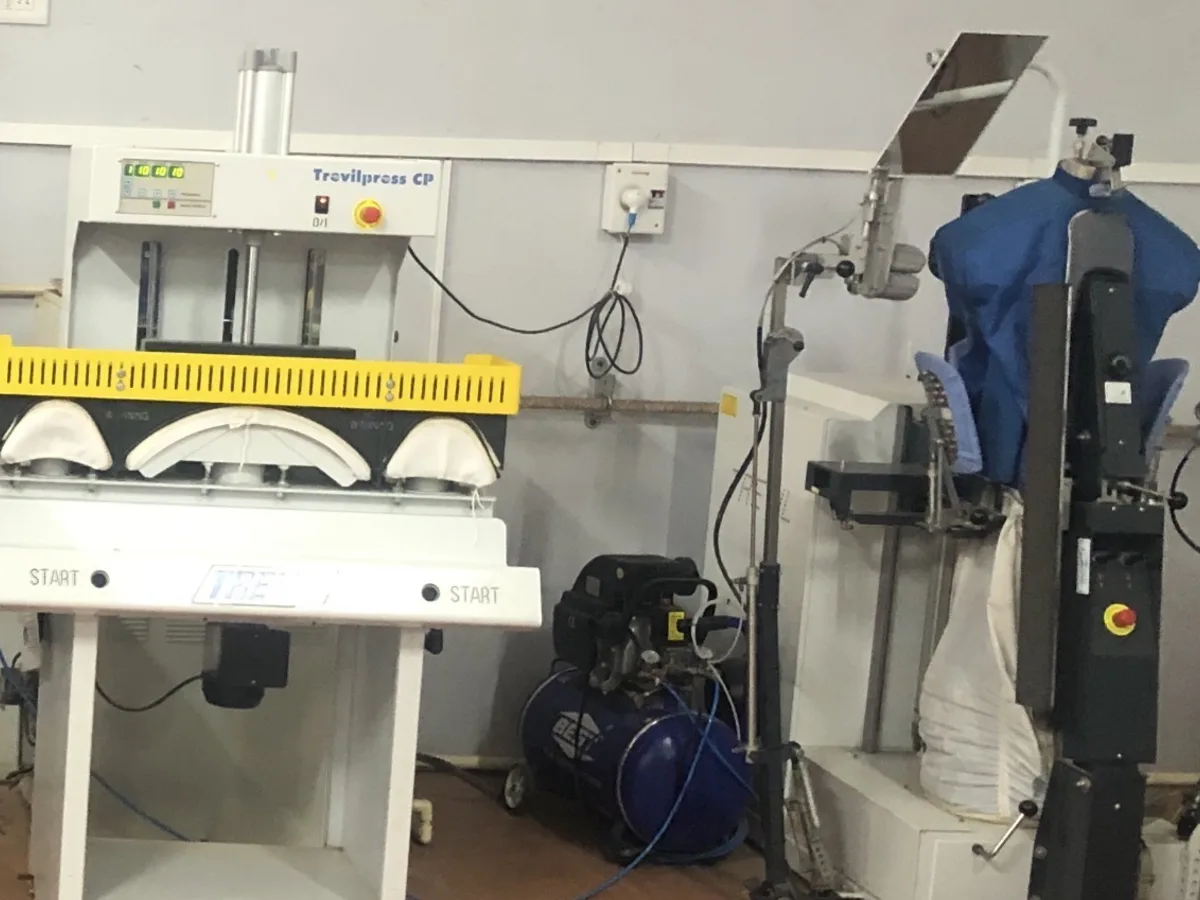
A shirt is finished in shape — body, cuffs and collar each on the tool built for them. Formal wear looks tailored again, not merely flattened.
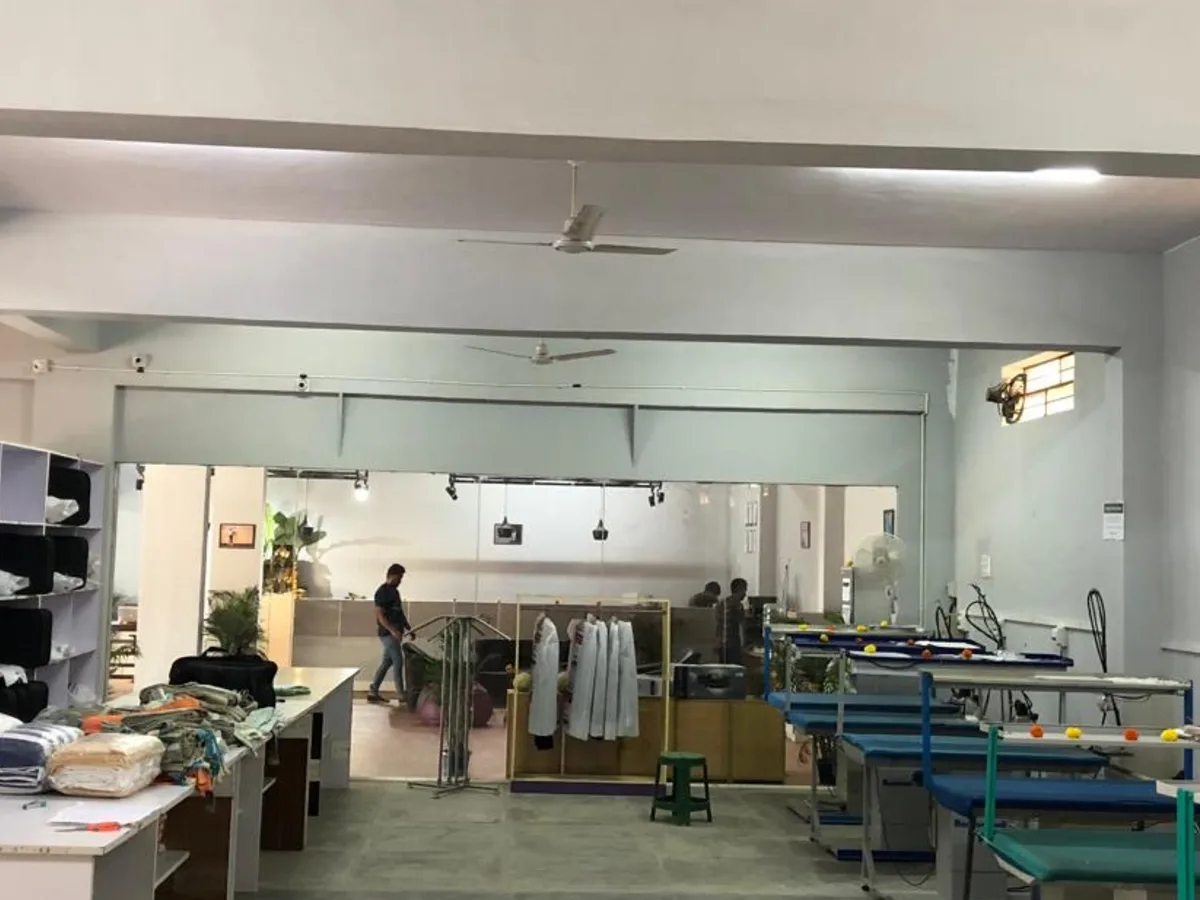
Orders are rebuilt shelf by shelf against the tags, checked once more, then sealed. Nothing leaves the building part-finished.
Wash temperature, dry setting and press heat follow the care label on each garment, not one setting for the whole load.
Right process, right heat, right chemistry. Most damage to clothes is not dirt — it is a wash that was too hot or too harsh.
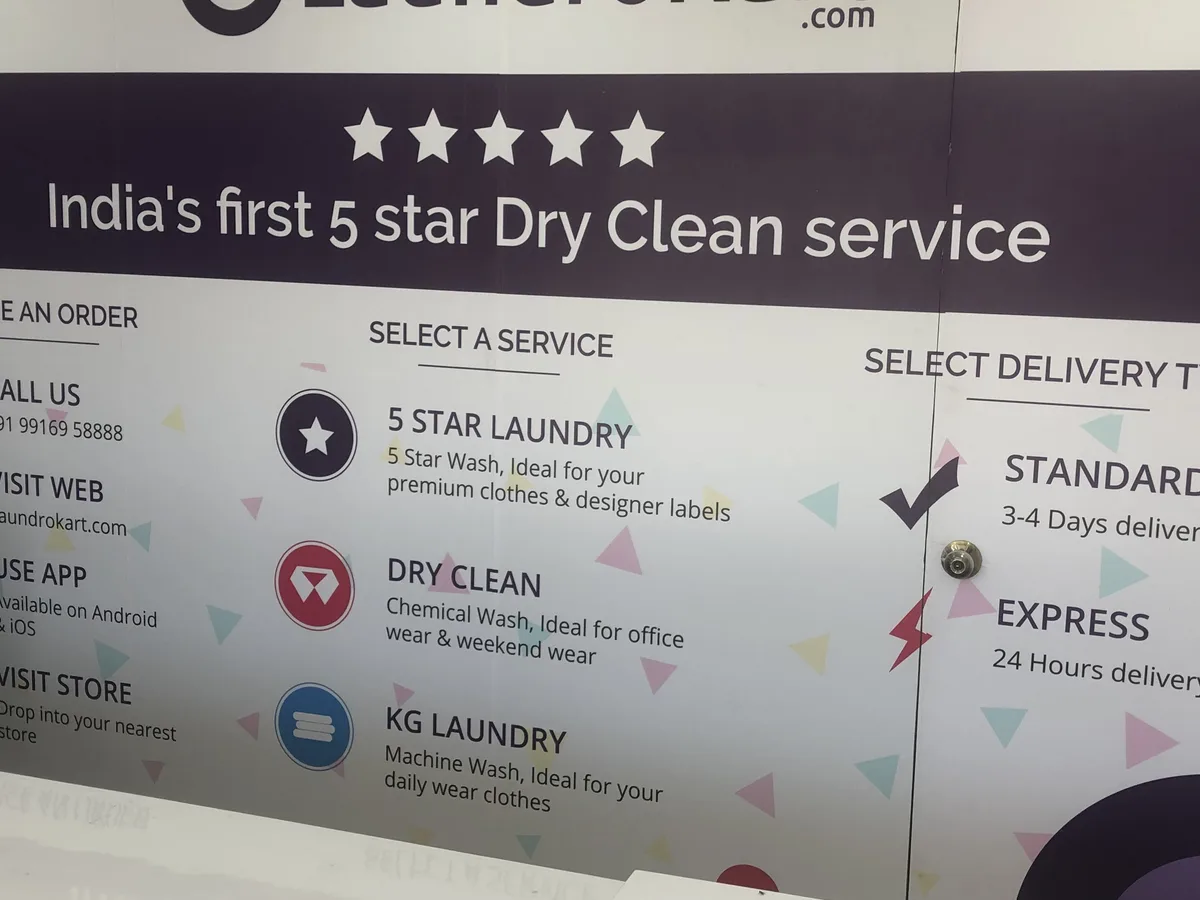
Standard is three to four days. Express is 24 hours, because the capacity to do it exists on site rather than being sent out.
The kit sets the standard; the team holds it. Most of our staff have been finishing garments for years, and the same hands that check a collar at the counter check it again before it is packed.
Free pickup and delivery across 50+ Bengaluru neighbourhoods. Book in a minute and your clothes join the queue above.